Short answer: yes, almost certainly — but maybe not yet. "Do I need a website" depends on whether your customers Google you before buying, how much of your work comes through referrals, and whether you're ever planning to grow. Here's the honest test.
When you don't need a website (yet)
There are real cases where a website is premature:
- You haven't tested whether the business works. If you're three months in and not sure if it's a real business yet, an Instagram page and word-of-mouth are enough. Don't spend £500 to test something a free profile will tell you.
- You're at full capacity from referrals alone. Diary booked solid, can't take on more, no plans to hire. Fine — but ask yourself whether you'd rather hire someone or earn more for the same hours. Both need a website eventually.
- Your customer doesn't Google. Rare in 2026, but exists. Some B2B niches still run on personal networks and trade shows. If you can't think of a time a customer Googled you, maybe you don't need one yet.
The three signals you're already losing work
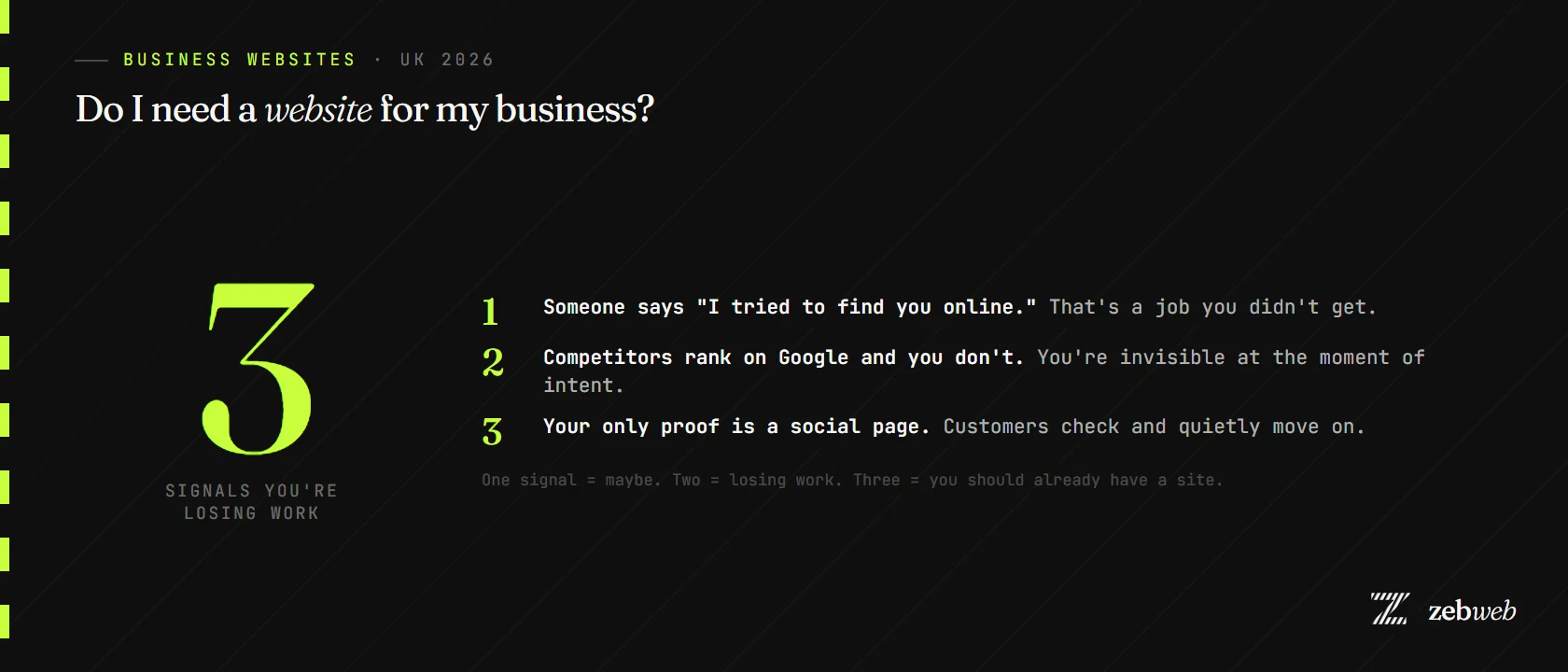
Most businesses asking "do I need a website" are already losing work without one. The signals are easy to spot:
- Someone tells you they "tried to find you online". If even one customer in the last six months has said "I almost couldn't find your number", you have a website-shaped hole in your business.
- You're losing work to competitors who are findable. If a customer has ever told you they were going to use you, then went with someone else who came up first on Google, that's the cost of not having a website made visible.
- You'd struggle to explain what you do without your social media. If your only "proof of business" is an Instagram profile with 38 followers and a four-month-old post, customers checking you out will quietly decide you're not a serious option.
One signal: you can probably get away without one for now. Two signals: you're losing work. Three: you should have a website already.
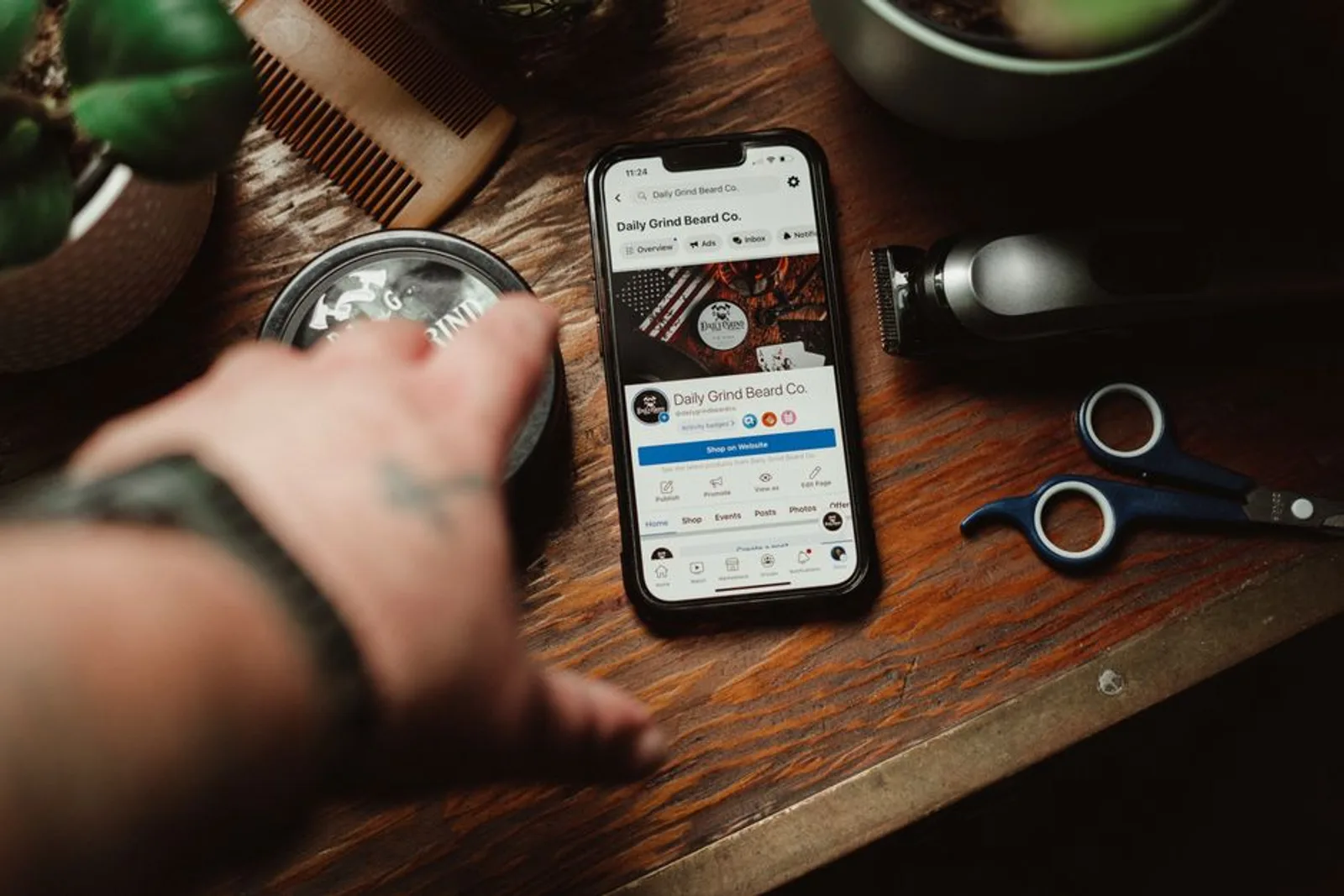
"But I have a Facebook page"
Facebook pages, Instagram profiles, and Google Business Profiles are not websites. They're real estate you rent. Facebook decides what your followers see, who can find you, and what your page looks like. Instagram regularly resets reach. Google can suspend a GBP listing in an afternoon — we've seen it happen to two Lincoln businesses this year.
None of that is a problem if it's an extra channel. It's catastrophic if it's your only channel.
"But I'm just a one-person business"
The smaller the business, the more disproportionate the boost from a basic website. A five-page site for £500 lets a sole-trader plumber, electrician, decorator, or photographer:
- Rank on Google for their town + service ("plumber Lincoln", "wedding photographer Newark")
- Show prices, reduce time spent on phone enquiries that go nowhere
- Show real work, not just whatever Instagram lets people scroll past
- Have an email address that ends in @yourbusiness.co.uk instead of @gmail.com
None of that requires being a 50-employee company. The cost-benefit usually swings hardest at the small end.
The "wait and see" trap
Most business owners we talk to about "do I need a website" have been thinking about it for over a year. In that time, customers have been Googling them and finding nothing. The website would have paid for itself in week three.
If you're at the "should I or shouldn't I" stage, the maths is rarely close. A £500 site that brings in one extra job a month pays for itself in the first month for almost every trade or service business.
When the answer is definitely yes
- You sell anything online (physical or digital products)
- Customers need to see prices, services, or hours before they call
- You serve a specific town or area and want to be found by Google
- You're growing or want to
- You charge enough that losing one customer to a Google search costs you more than the website
How small can it start?
Genuinely small. Five pages, £500 one-off, two weeks to live. That's enough for most sole traders and small businesses. You can always upgrade later — the Standard tier is designed to be the right starting point, not the limit.
For the full breakdown of what a website actually costs and what you're paying for, read the UK pricing post, or build a quote in 60 seconds.