Short answer: yes, probably. But not for the reason you think. Most Lincoln tradespeople don't need a website to get more calls — they need one so the calls they already get convert. Here's what that means in practice.
The word-of-mouth trap
Lincoln is a city of about 100,000 people. Word-of-mouth travels well here. A good plumber in Skellingthorpe or a reliable electrician in the Ermine Estate gets recommended constantly — and for the first few years, that's enough. Business is full, the phone rings, there's no obvious gap a website would fill.
The problem shows up in three specific situations:
- When a potential customer Googles you before calling. They were recommended you by a neighbour. But before they pick up the phone, they search your name. If nothing comes up — or worse, an old Facebook page with no reviews comes up — they call someone else instead. You never know they existed.
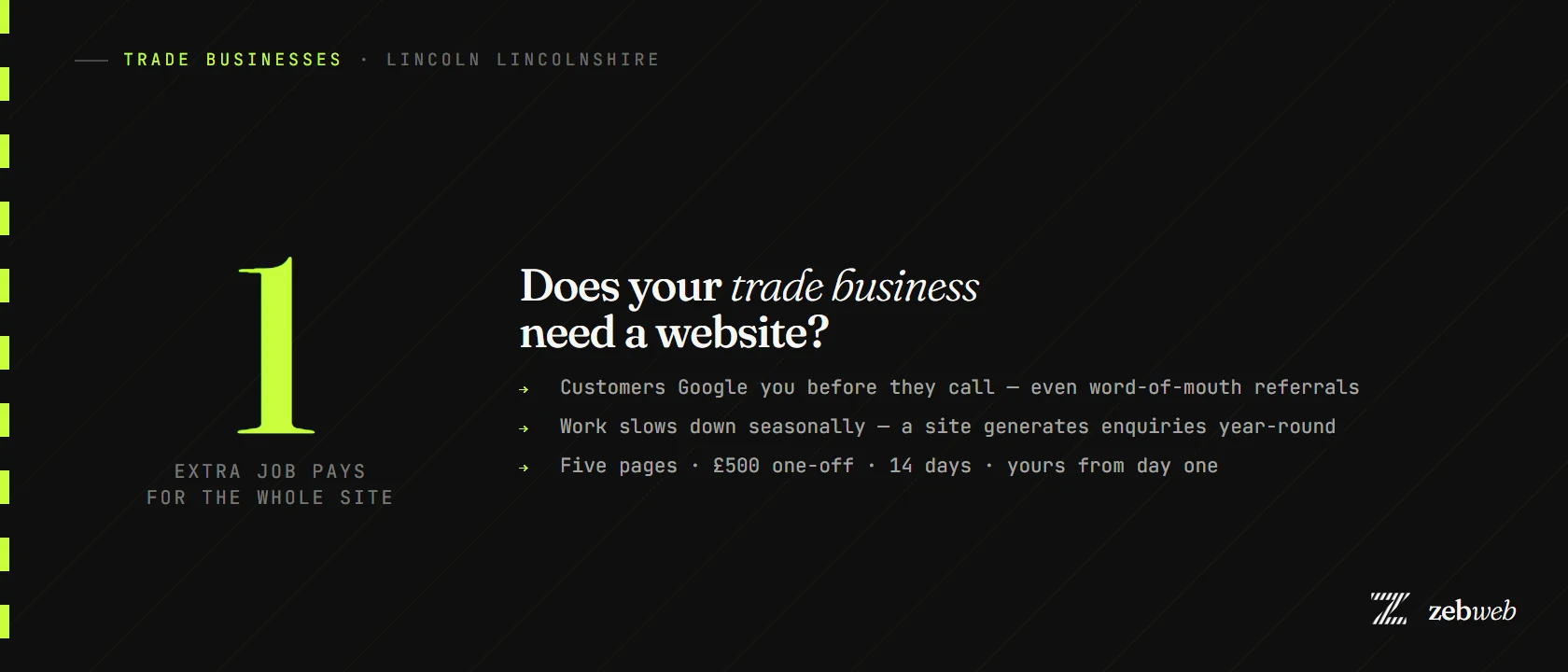
- When work slows down seasonally. Every trade has quiet months. Word-of-mouth dries up at the same time the work does. A website generates enquiries year-round because it works while you sleep.
- When you want to grow. Taking on an apprentice, buying a new van, expanding into a second trade — all of these are easier when you have a consistent, predictable source of work that doesn't rely entirely on personal networks.
What customers actually do before hiring a Lincoln tradesperson
The pattern is consistent: someone gets a recommendation, then immediately searches online to validate it. They're not looking to find a cheaper option — they're looking for reassurance that you're real, you're good, and you're worth the call.
What they want to find:
- A real website (not just a Facebook page)
- Photos of actual work, ideally local Lincoln jobs
- Google reviews with your business name on them
- A phone number that's easy to find
- Some indication of what areas you cover and what you charge
A website ticks all of these in one place. A Facebook page ticks some of them, badly.
The specific problem with Facebook for trade businesses
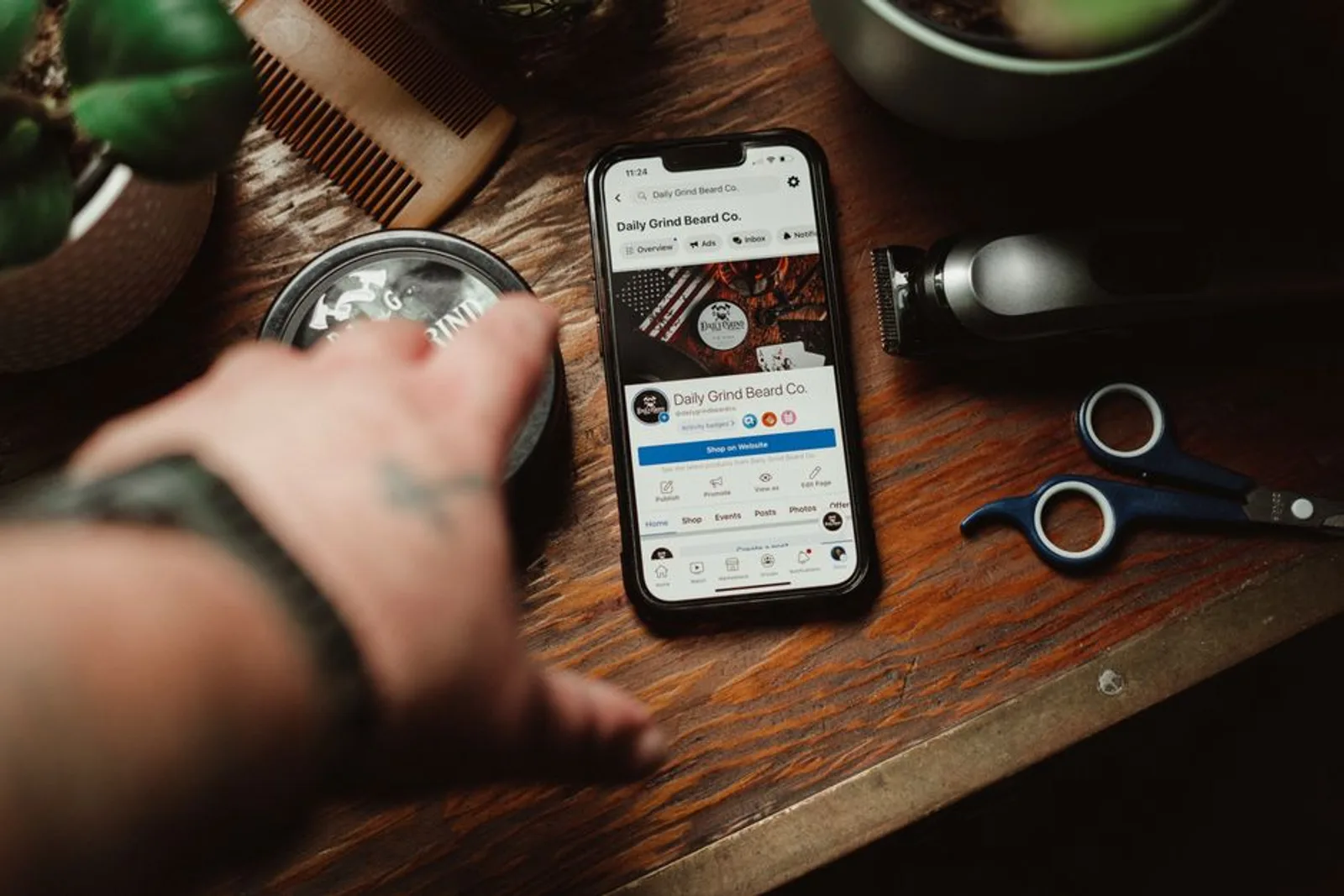
Facebook is not a website. It's a social platform that can go down, change its algorithm, decide your posts reach 3% of your followers, or — as many Lincoln tradespeople have found — lock you out of your account for reasons that take weeks to resolve. You don't own it, you can't optimise it for search, and a customer who Googles "emergency boiler repair Lincoln" will never find your Facebook page in position one.
Facebook is useful for staying in touch with existing customers and for local community groups. It's a supplement, not a foundation.
What a trade website needs to actually work
A Lincoln plumber's website doesn't need to be complex. It needs to:
- Load quickly on mobile. Most searches for tradespeople happen on a phone, often in an emergency. A slow site loses the job before you answer.
- Make the phone number impossible to miss. Everything else is secondary. The phone number should be in the header, clickable on mobile, and repeated at the bottom of every page.
- Cover the areas you serve. "Lincoln plumber" is a keyword. "Plumber in North Hykeham" is a keyword. "Emergency plumber Skellingthorpe" is a keyword. Each area page you have is another chance to be found.
- Show real photos. Stock images of a white van with a generic logo do nothing. Photos of actual jobs — a bathroom in Nettleham, a rewired kitchen in Brant Road — build trust with Lincoln customers who know what local work looks like.
- Have Google reviews and a Google Business Profile. The local pack (the three businesses that appear with a map at the top of Google) is driven by Google Business Profile. A website without GBP is working at half capacity.
How much does a trade website cost in Lincoln?
It doesn't need to be expensive. A Lincoln plumber, electrician, builder, or decorator needs:
- A homepage (who you are, what you do, where you work, how to call)
- A services page (what specifically you offer)
- 2–4 area pages (Lincoln, plus the specific towns and villages you cover — or the Lincolnshire county page if you cover the whole region)
- A contact page with a form and your number
That's a Standard build — up to 5 pages, £500 one-off at Zebweb. You own the code. The £150/mo Cruise care plan covers hosting, SSL, daily backups, security monitoring, and unlimited edits (48-hour turnaround) on a 6-month minimum.
For a trade business turning over £40,000–£80,000 a year, a website that converts even one extra job a month pays for itself inside a week.
The tradespeople who don't need a website
To be fair: some don't. If you're at full capacity with a waiting list, your books are closed, and you have no intention of growing — there's no urgent case. You're already winning without one.
But most Lincoln tradespeople aren't in that position. Most are either growing, want to grow, or have inconsistent months they'd rather smooth out. A website fixes all three situations for a one-off cost you can recoup in a single job.
If that sounds like your situation, see our web design Lincoln service page, build a quote here, or read the full breakdown of what a Lincoln website actually costs before you decide.